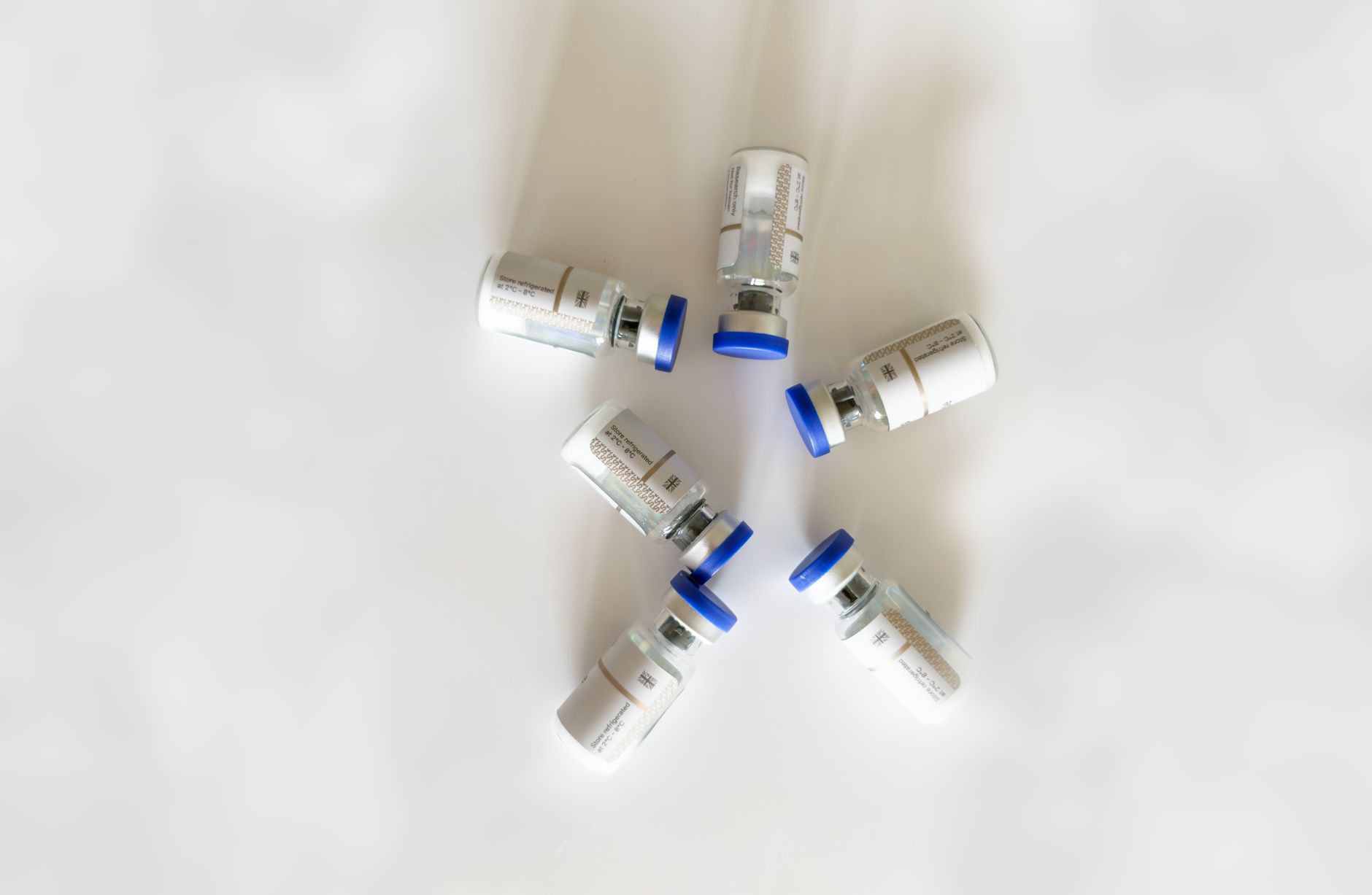
UK peptide vendors reviews, in the PeptideTrust sense, answer one narrow question: how completely does a vendor publish laboratory evidence for the material it ships, and can a buyer check that evidence at its source? This guide compares three UK facing vendors on our ten transparency criteria, explains the documentary differences behind the numbers, and sets out what to verify before ordering. Everything discussed here concerns research chemicals sold for research use only. Nothing below is medical, legal, or dosing guidance.
What does a transparency score for a UK peptide vendor actually measure?
The score measures documents, not products. PeptideTrust rates a vendor on ten weighted criteria covering whether a certificate of analysis (CoA, the laboratory report for a given production lot) is published openly, whether it carries a batch or lot number, whether the testing laboratory is named, whether the analysis date is visible, and whether the result can be confirmed on the laboratory's own domain rather than only as a PDF hosted by the seller. The full weighting is set out in our scoring methodology. Two points follow from this design. First, transparency is a documentary property, not a marketing claim: a vendor earns points by publishing retrievable evidence, not by describing its quality programme. Second, a high score says nothing about whether any specific vial is pure, safe, or suitable for anything. It says the evidence trail was available and internally consistent on the day we looked.
How do the three UK vendors compare on the ten criteria?
All three scores below were measured by PeptideTrust on 2026-11-06. PeptideTrust has no affiliation, commercial relationship, or referral arrangement with any of the three vendors, and no affiliate parameters are used anywhere on this site. Scores are exact as recorded: we never round them.
| Vendor | Transparency score (2026-11-06) | Review page |
|---|---|---|
| Peptology Labs | 93/100 | Peptology Labs review |
| Pepspan | 86/100 | Pepspan review |
| BioHack London | 84/100 | BioHack London review |
Pepspan was additionally recorded at 90% evidence coverage on the same date. Scores are reassessed as vendors change what they publish, so treat the table as a snapshot and confirm the current figures on the live transparency scoreboard before drawing any conclusion.
What separates a 93 from an 84 on the scorecard?
The gap between the three is narrow, and it is made of document structure rather than tone of voice. Three criteria do most of the separating. The first is batch level reporting: a CoA tied to the specific lot number printed on the vial scores higher than one generic certificate reused across a whole product line. The second is laboratory attribution: a named, independent third party laboratory scores higher than an unnamed claim such as tested by an external lab, because an unnamed laboratory cannot be checked for existence or accreditation. The third is report freshness, since a CoA describes one batch at one point in time. Smaller differences come from whether a chromatogram is attached rather than a bare percentage, and whether a verification code resolves on the laboratory's own site. The per criterion breakdown for each vendor sits on its individual review page, which is where the arithmetic behind the totals is shown.
What does evidence coverage mean, and why does Pepspan's 90% matter?
Evidence coverage expresses how much of a vendor's assessment rests on documents we could retrieve and archive ourselves, as opposed to statements we could read but not independently confirm. Pepspan was recorded at 90% evidence coverage on 2026-11-06, alongside its 86/100 transparency score. The two figures answer different questions. The score asks how transparent the published evidence is; coverage asks how much of that score is anchored in retrievable artefacts such as a dated CoA with a lot number, a chromatogram, or a verification page on a laboratory domain. A high score with low coverage would be a weaker result than the same score with high coverage, because more of it would depend on unverifiable assertions. The remaining uncovered portion, and the reason for it, is itemised on the vendor's review page rather than summarised here, since it changes as documents are added or withdrawn.
Why does the named laboratory matter more than the purity percentage?
A purity figure is only as strong as the laboratory behind it. High performance liquid chromatography (HPLC) measures purity by separating a sample into peaks and reporting the target peak as a percentage of total peak area, for example 99.0%. The chromatogram, meaning the plotted trace, is the actual evidence: a number with no trace behind it cannot be audited. Mass spectrometry (MS, often run as liquid chromatography mass spectrometry or LC-MS) answers a different question, identity, by measuring molecular mass to confirm the compound is the peptide claimed. A sample can be 99% pure and still be the wrong molecule, which is why identity and purity are not interchangeable, as explained in our guide on purity versus identity testing. A named laboratory, ideally accredited to ISO/IEC 17025 (the international standard for testing laboratory competence), makes both results checkable. An anonymous laboratory makes both unfalsifiable.
How fresh does a certificate of analysis need to be?
A CoA is a statement about one batch on one date, not a permanent property of a product name. That is why the analysis date and the lot number are scored criteria rather than cosmetic details. If the certificate on a product page is dated long before the batch you are sent, it describes material you did not buy. The practical test is matching: the lot number on the certificate should match the number printed on the vial you receive, and the date should be consistent with that lot. Where a vendor publishes a dated certificate per lot and keeps older ones accessible, a buyer can see a history rather than a single favourable snapshot. Where only one undated document exists for an entire catalogue, freshness cannot be assessed at all. Our walkthrough of how to read a peptide CoA covers the fields to compare line by line.
What should a UK buyer check before placing an order?
Work through the documents before payment, because a certificate promised only after purchase cannot inform the purchase. A short checklist:
- Is a CoA published openly, before any order, rather than available by email on request?
- Does it carry a batch or lot number, and does that number match the vial on arrival?
- Is the testing laboratory named, and does that laboratory demonstrably exist? See our guide to independent third party testing laboratories.
- Is a chromatogram attached, or only a percentage?
- Is there an identity result (MS or LC-MS), not purity alone?
- Does any verification code or QR code resolve on the laboratory's domain rather than the vendor's?
- Is the analysis date present and plausible for the batch shipped?
Any single failure is informative rather than conclusive, but several together describe a vendor whose claims cannot be checked at all.
What do these transparency scores not tell you?
They do not tell you that a peptide is safe, effective, or appropriate for any purpose, and they are not a quality ranking of the chemical itself. A purity and identity CoA describes composition, not safety. Most standard peptide CoAs contain no sterility or endotoxin data: endotoxins (bacterial lipopolysaccharides) are measured by the Limulus Amebocyte Lysate (LAL) assay and reported in EU/mg or EU/mL under USP <85>, while sterility is a separate test under USP <71>. Passing one does not imply the other, and the absence of both from a certificate is common and must never be read as a sterility guarantee. These materials are research chemicals supplied for research use only. This guide offers no dosing, administration, or medical guidance of any kind, and no score on this site should be treated as a recommendation to buy.
Where can you confirm whether these numbers still hold?
Scores move when vendors change what they publish, so a figure quoted in an article ages. The three results above are fixed to 2026-11-06: Peptology Labs 93/100, Pepspan 86/100 with 90% evidence coverage, and BioHack London 84/100, none of them affiliated with PeptideTrust. For current values, consult the ranked scoreboard, then open the relevant review page to see which criteria carried the total and which documents were archived as evidence. If you want to apply the same reasoning to a vendor we have not assessed, the ten criteria and their weights are published in full in our methodology. Applied consistently, the method is reproducible by any careful reader: find the certificate, find the batch number, find the laboratory, and confirm the result where the laboratory itself publishes it.